Lead OSIRIS-REx Curator Astromaterials Research and Exploration Science (ARES), NASA Johnson Space Center, March 2023-Present
•Led curation team activities toward development of procedures for spacecraft disassembly, processing, and preliminary examination of a returned asteroid sample
• Development of collection conservation long-term planning documents
• Coordinated contamination control and knowledge activities to prevent sample contamination
• Coordinated development of curation database for returned samples
• Managed curation interface with mission science team, including development of curation compliant science equipment that will be used in the cleanroom during preliminary examination
• Coordinated database documentation of contamination knowledge samples
Deputy OSIRIS-REx Curator, Astromaterials Research and Exploration Science (ARES), NASA Johnson Space Center, March 2020-March 2023• Managed curation interface with mission science team, including development of curation compliant science equipment that will be used in the cleanroom during preliminary examination
• Coordinated contamination control and knowledge activities to prevent sample contamination
• Co-lead curation team activities toward development of procedures for spacecraft disassembly, processing, and preliminary examination of a returned asteroid sample• Contributed to the OSIRIS-REx curation plan, including leading the writing and editing of the plan during the last year before the plan was finalized in January 2022
• Coordinated database documentation of contamination knowledge samples
• Managed and conducted monitoring of the OSIRIS-REx curation clean lab
• Lead NASA proposal review panels as a group chief
• Attended Antarctic meteorite allocation panels to learn how to organize similar astromaterial allocation panels for the OSIRIS-REx collection
• Worked on the loan agreement for the OSIRIS-REx collection
Postdoctoral Researcher, Department of Earth and Planetary Sciences, Rutgers University, September 2018-Present
- Studying the petrology and geochemistry of lunar meteorite breccias, Rumuruti chondrites, and iron meteorites
- Instructor-of-record for Planet Mars, a planetary geology course for non-majors
Peter Buck Smithsonian Institution Postdoctoral Fellow, National Museum of Natural History, Smithsonian Institution, September 2015-September 2018
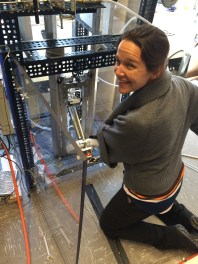
- Performed melting and hydrothermal experiments using a 1-bar gas mixing furnace, a vertical furnace with a molybdenum-alloy pressure vessel experiments at high temperatures and moderate pressures (e.g., 1100 °C and 500 bars), and a horizontal cold seal furnace at moderate temperatures and pressures (e.g., 700 °C and 400 bars)
- Characterized experimental charges and meteorites with petrographic microscope
- Analyzed experimental charges and meteorites with scanning electron microscope and electron microprobes (JEOL 8900, JEOL 8530F at the Carnegie Institution for Science, and JEOL 8530F at the Smithsonian Institution)
- Outreach including meteorite vault tours, public programs, and presentations to middle school students
- Mentor to graduate and undergraduate students
Graduate Researcher, Lecturer, and Teaching Assistant, University of Tennessee, Knoxville, August 2012-August 2015
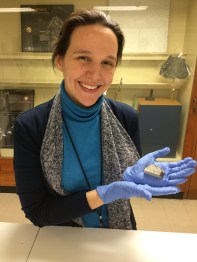
- Performed research involving meteorite petrology and geochemistry
- Used the following instruments: electron microprobe (EMP), secondary ion mass spectrometer (SIMS), laser ablation-inductively coupled-mass spectrometer (LA-ICP-MS), Raman microprobe, scanning electron microprobe (SEM), and petrographic microscope
- Taught, as a lecturer, an introductory-level physical geology course
- Guest lectured in mineralogy and introductory planetary geology
- Led and designed laboratory activities for mineralogy, petrology, and introductory planetary geology
- Mentored undergraduates working on senior theses and other research projects
Meteorite Technician Contractor, National Museum of Natural History, Smithsonian Institution, September 2010-August 2012.
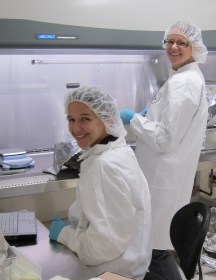
- Performed support and classification work for the Antarctic Meteorite Collection
- Prepared meteorite sections for scanning electron microscope, electron microprobe, and 40Ar-39Ar analyses
- Assisted curators and summer interns with research projects: surveyed potential research samples, cut/subsampled meteorites, documented meteorite subsampling, analyzed samples with the scanning electron microscope and electron microprobe, extracted/processed data, drafted figures, replied to reviewer comments regarding figures, and other support activities
- Evaluated and responded to potential meteorites from members of the public
- Photographed and scanned ~2,000 meteorite thin sections as part of a collection digitization project
Volunteer Math Teacher, Academy of Hope in Washington, D.C., January 2011-July 2012
- Taught basic arithmetic to adults preparing to take the GED
Adjunct Faculty Member, University of St. Thomas in St. Paul Minnesota, January 2010-July 2010
- Taught and prepared laboratory activities
- Guest lectured in introductory-level Physical Geology and Natural Disasters courses
- Led field trips for introductory students
Field Assistant, Villanova University, May 2009-August 2009
- Measured carbon dioxide gas emission for a carbon sequestration study
Graduate Researcher and Teaching Assistant, University of California, Davis, September 2005-May 2009
- Set-up a laboratory space for pollen and phytolith extraction
- Implemented and modified a phytolith (biogenic opal from plants) extraction procedure
- Taught geology discussion sessions and guest lectured to classes of up to 100 students
- Supervised students at field camp mapping faults through Quaternary glacial moraines and alluvial fans
Research Assistant, USGS California Water Science Center, June 2006-September 2006
- Assisted with sediment core processing, digitally analyzing peat core photographs, bulk density measurements, and loss-on-ignition analyses
NSF-REU Intern, University of Minnesota, Twin Cities, June 2004-September 2004
- Assisted in the collection of sediment cores, modern ostracods and groundwater
- Performed the following analyses on sediments: loss-on-ignition, grain size distribution, and magnetic susceptibility
- Picked and identified mollusk faunal remains
 Nicole Lunning